
The White Door Mod Apk v.1.2.6 (Full Game)

- App Name The White Door
- Version 1.2.6
- Sizes 100M
- Requirements Android 6.0
- Developer Second Maze
- Genre Paid
- Updated Nov 01, 2025
- Platform GooglePlay






In an era where digital entertainment increasingly intertwines with profound human experiences, the landscape of video games has evolved far beyond mere escapism. Today, titles that dare to explore the complexities of the human psyche, mental health, and memory loss are gaining unprecedented traction. This burgeoning trend reflects a collective desire for richer, more contemplative narratives that challenge players intellectually and emotionally. Amidst this cultural shift, a particular genre — the point-and-click adventure — has experienced a renaissance, reimagined for a modern audience seeking depth over frenetic action. It’s within this captivating context that “The White Door” emerges as a poignant example, a game that transcends traditional mechanics to offer a deeply personal journey into the mind of a patient grappling with amnesia. Its stark, minimalist aesthetic coupled with a compelling, psychological narrative makes it not just a game, but an interactive art piece, resonating with players worldwide who are eager to delve into stories that provoke thought and empathy. This exploration into the forgotten corners of one’s own identity, set against a backdrop of mystery and introspection, positions “The White Door” as a significant and relevant work in contemporary interactive storytelling, mirroring broader societal conversations about mental well-being and the subjective nature of reality.
THE EVOLUTION OF NARRATIVE POINT-AND-CLICK GAMES
The point-and-click genre, traditionally characterized by inventory puzzles and environmental interaction, has undergone a significant transformation, with titles like “The White Door” leading the charge toward more narrative-driven experiences. Far from the convoluted logic puzzles of yesteryear, this game prioritizes atmosphere, emotional resonance, and a seamless flow of interaction that serves the story rather than merely gating progress. Players are invited into a world where every click, every observation, and every seemingly mundane routine is imbued with deeper meaning, subtly guiding the protagonist, Robert Hill, through his daily life within a mental health facility. The game’s minimalist interface and intuitive controls contribute to a remarkably harmonious experience, ensuring that players remain fully immersed in Robert’s perspective. This design choice is critical for a game that aims to explore such sensitive themes as memory loss and the struggle for self-identity. By simplifying the mechanics, the developers allow the intricate narrative and psychological depth to take center stage, fostering a meditative and often unsettling journey for the player. As the story unfolds, the game introduces increasingly surreal and thought-provoking elements, particularly within Robert’s dream sequences, transforming routine interactions into profound introspections. This approach redefines what a modern point-and-click adventure can be, pushing the boundaries of interactive storytelling and player engagement beyond conventional expectations. The focus shifts from solving external challenges to piecing together an internal world, making each interaction a step closer to understanding Robert’s fractured reality.
DECODING THE FRAGMENTED MIND: AMNESIA AND DREAMS
At the heart of “The White Door” lies a captivating exploration of amnesia and the intricate landscapes of the subconscious mind. The protagonist’s struggle to recall his past, waking up in an unfamiliar mental hospital, serves as the central enigma that propels the narrative forward. Through a series of carefully crafted daily routines and increasingly vivid dreams, players are tasked with helping Robert reconstruct his memories. Each object, every interaction, and even the most fleeting facial expression from Robert offers crucial clues, subtly hinting at the secrets hidden beneath his amnesiac state. The game masterfully utilizes environmental storytelling, where the simplest items in Robert’s room or the hospital ward hold symbolic weight, reflecting fragments of his lost life and personality. Players must observe, interact, and deduce, piecing together a psychological puzzle that reveals not just what happened, but who Robert truly is. The dreams, in particular, are central to this process. They are not random occurrences but carefully constructed allegories, each appearing in distinct settings with subtle yet significant changes that nudge players towards deeper revelations. These dream sequences become portals into Robert’s repressed memories and emotional traumas, providing a surreal yet deeply personal connection to his past. The delicate balance between the stark reality of the hospital and the abstract nature of his dreams allows the game to delve into the complex interplay between consciousness and the unconscious. This sensitive portrayal of mental health and memory recovery distinguishes “The White Door” as a profound narrative-driven psychological thriller game, inviting players to empathy and introspection, while unraveling the intricate tapestry of a fragmented mind.
INTERACTIVE MECHANICS: PUZZLES AND PERCEPTIONS
“The White Door” ingeniously weaves its puzzle mechanics directly into the fabric of its psychological narrative, ensuring that challenges are not merely obstacles but integral parts of Robert’s journey of self-discovery. Each puzzle is intrinsically linked to the unfolding events and Robert’s emotional state, amplifying the intensity of his interactions and reactions. As players guide him through new ‘doors’ or into deeper dreams, they encounter a variety of riddles that require both logical thought and emotional intuition. These range from deciphering cryptic symbols to engaging in simple yet profound actions that trigger memory fragments. Some puzzles carry a distinct emotional weight, occasionally bordering on the unsettling, as they reveal darker aspects of Robert’s personality or pivotal moments from his past. This thematic integration ensures that every solved puzzle feels like a genuine step forward in understanding the protagonist’s amnesia and his true identity. Beyond the explicit puzzles, the game excels in offering in-depth interactions with the environment. Players can examine objects from various angles, listen to Robert’s internal monologues, and observe his subtle expressions – all of which serve as critical hints for progress. This meticulous attention to detail transforms seemingly simple controls into powerful tools for psychological exploration. By demanding careful observation and empathetic engagement, the game elevates player interaction from basic task completion to a deeply immersive and reflective experience. It’s through these nuanced interactions that players truly begin to connect with Robert’s inner world, making the journey to unlock his memories a profoundly personal and impactful endeavor. For those keen to understand how such intricate game mechanics enhance storytelling, exploring various titles can offer valuable insights.
THE INNOVATIVE POWER OF SPLIT-SCREEN STORYTELLING
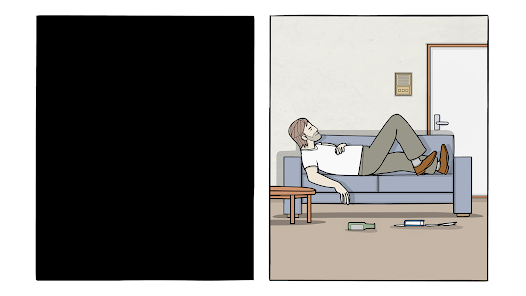
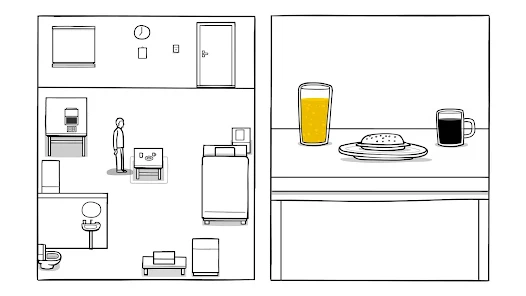
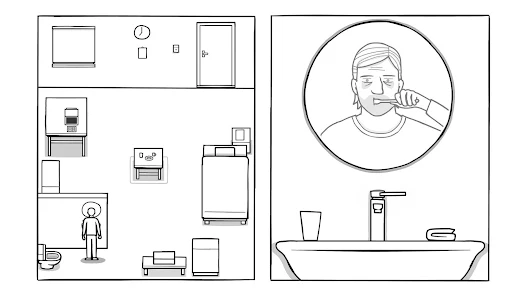
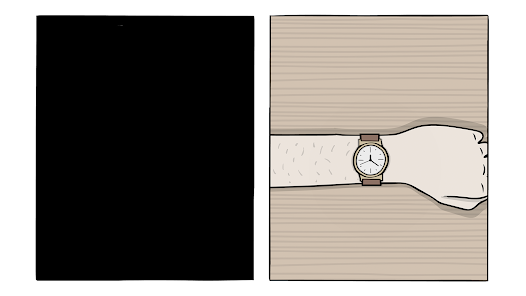
One of the most remarkable and innovative features of “The White Door” is its sophisticated use of a split-screen display, which elevates the game’s narrative and psychological depth to an extraordinary level. This design choice is not a mere visual gimmick but a fundamental storytelling device, allowing players to simultaneously witness and process different scenarios or perspectives that are happening concurrently. Typically, one side of the screen depicts Robert’s monotonous daily routine within the mental hospital – breakfast, therapy, observation – while the other side unveils fragmented memories, surreal dreamscapes, or abstract representations of his subconscious. This dual perspective is crucial for piecing together Robert’s past, as players are often required to draw connections between seemingly disparate events occurring in two distinct dimensions. For instance, an action performed in Robert’s present reality might trigger a related memory in the dream world, or an object in his hospital room could parallel a symbol in his subconscious. This synchronicity forces players into a more active role of interpretation and analysis, transforming passive viewing into an engaging cognitive exercise. The split-screen enhances the overall immersion, providing a vivid illustration of Robert’s fragmented mental state and the persistent interplay between his conscious struggles and unconscious desires. Many critical moments in the game hinge on the player’s ability to link these two visual streams, offering a profound sense of progression in understanding the overarching narrative and the protagonist’s complex psychological journey. This innovative approach to visual storytelling not only distinguishes “The White Door” within the indie game scene but also sets a new benchmark for how interactive experiences can convey intricate psychological themes and multifaceted realities, allowing players to truly inhabit the disoriented mind of someone experiencing amnesia.
CONCLUDING THOUGHTS: A JOURNEY OF SELF-DISCOVERY AND ARTISTIC EXPRESSION
“The White Door” stands as a compelling testament to the evolving power of video games as a medium for artistic expression and profound human storytelling. It is far more than a simple point-and-click adventure; it is a meticulously crafted psychological journey that invites players to delve into the depths of memory, mental health, and the elusive nature of self-identity. Through its minimalist aesthetics, deeply integrated narrative puzzles, and the revolutionary split-screen mechanic, the game successfully creates an immersive and emotionally resonant experience that lingers long after the credits roll. The exploration of Robert Hill’s amnesia and his quest for self-discovery resonates profoundly with contemporary audiences seeking meaningful and thought-provoking interactive experiences. The game’s sensitive portrayal of complex psychological themes, combined with its innovative gameplay, positions it as a significant contribution to the narrative-driven indie game movement. It serves as a powerful reminder of how interactive art can offer unique perspectives into the human condition, fostering empathy and encouraging introspection. For players seeking experiences that challenge the mind and touch the soul, “The White Door” offers an unparalleled journey into the hidden secrets of the subconscious. Its success underscores a growing appetite for games that prioritize emotional depth and artistic integrity over conventional thrills, pointing towards a future where video games are increasingly recognized for their capacity to tell complex, impactful stories and explore the nuances of human experience.
Whats News
Thank you for playing The White Door! We fixed a few bugs in this new version.- Votes: 1
- Comments: 0
Download The White Door for Android for free.
Full Game















There are no comments yet :(