
All Who Wander Mod Apk v.1.2.7 (Menu, Damage Multiplier, Dumb Enemy)

- App Name All Who Wander
- Version 1.2.7
- Sizes 76M
- Requirements Android 5.1
- Developer Frumpydoodle Games
- Genre Role Playing
- Updated Nov 23, 2025
- Platform GooglePlay
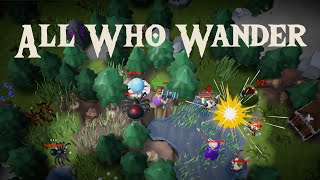


In an era dominated by hyper-realistic graphics and complex narratives, a quiet revolution is underway in the gaming world: the resurgence of classic game genres. Among these, the roguelike stands as a titan, offering a blend of unforgiving challenge, profound strategic depth, and unparalleled replayability. This enduring appeal stems from a design philosophy that prioritizes player agency, emergent storytelling, and the thrill of navigating unpredictable worlds. Far from being a niche curiosity, the roguelike genre continues to captivate a growing international audience, with new titles and faithful homages regularly topping charts and sparking passionate community discussions. This article delves into the core tenets that define a truly classic roguelike experience, exploring how its foundational elements – from character development and world generation to high-stakes combat – continue to resonate deeply, offering a powerful antidote to more linear, predictable gaming experiences.
The Enduring Principles of Classic Roguelike Design
The essence of a classic roguelike experience lies in its unyielding adherence to certain core design principles, elements that have defined the genre since its inception. Unlike many modern titles that guide players through a curated journey, traditional roguelikes throw players into a harsh, procedurally generated world with minimal hand-holding. This approach creates a uniquely demanding yet incredibly rewarding experience, fostering a deep sense of accomplishment with every small victory. The commitment to these classic mechanics is not merely an homage but a deliberate design choice aimed at maximizing player engagement through challenge and unpredictability.
At the heart of this philosophy is **permadeath**, a feature that dictates the permanent loss of a character and their progress upon defeat. This mechanic is arguably the genre’s most defining characteristic, imbuing every decision and encounter with significant weight. Players are forced to think strategically, manage resources meticulously, and prioritize survival above all else. This isn’t just about making the game harder; it’s about making every run distinct and meaningful, transforming failure into a valuable learning experience rather than a mere setback. The mantra of “if you can’t fight, you ought to run away” becomes a guiding principle, emphasizing tactical retreats and risk assessment as much as direct combat prowess.
Coupled with permadeath is **procedural generation**, which ensures that no two playthroughs are ever identical. From dungeon layouts and enemy placements to item drops and environmental hazards, the world is newly constructed for each adventure. This constant variation prevents rote memorization and encourages adaptability, forcing players to continuously learn and react to fresh challenges. This randomness, far from being chaotic, provides a canvas for emergent narratives – unique stories born from the interplay of systems and player choices. It’s a testament to the genre’s design that even after hundreds of hours, players can still encounter novel situations and discover new strategies. This focus on replayability and dynamic content ensures that the classic roguelike remains an evergreen source of entertainment for discerning players.
Mastering Diverse Character Development and Hybrid Builds
A cornerstone of any compelling role-playing experience is the depth of its character creation and progression systems, and classic roguelikes often excel in offering robust options that significantly impact gameplay. Providing up to 10 distinct character archetypes, a truly engaging roguelike experience allows players to immediately grasp the fundamental strengths and weaknesses of their chosen avatar. Each character often embodies a specific class from a rich medieval fantasy tapestry, offering a unique set of starting abilities, statistics, and tactical approaches that cater to varied playstyles.
The emphasis on **Lesson Assortment** is crucial for high replay value. The inherent differences in how each character operates mean that tackling the same challenges with a different hero creates an entirely new experience. A melee-focused warrior will navigate monster encounters differently than a stealthy rogue or a spell-slinging wizard. This diversity ensures that players are constantly experimenting, finding new ways to overcome obstacles and adapt to the ever-changing environments. What might be an easy path for one class could be a formidable gauntlet for another, fostering a continuous cycle of learning and strategic adjustment.
However, the true innovation often lies in the concept of **Boundless Customization**. Many traditional RPGs lock players into rigid class-specific gear, limiting their strategic options. In contrast, a well-designed roguelike often empowers players with the freedom to equip virtually any item they discover, regardless of their starting class. This liberation from conventional class restrictions is not merely a convenience; it is a profound design choice that encourages creative experimentation. Imagine a nimble archer donning heavy plate armor to tank hits, or a scholarly mage wielding a formidable greatsword. This level of flexibility opens up an astonishing array of strategic possibilities, allowing players to truly forge their unique path through the game’s challenges. For those eager to explore comprehensive guides on character builds and optimize their gameplay, you can explore comprehensive guides on character builds on our site.
This freedom culminates in the exciting concept of **Cross-breed Builds**. By removing equipment restrictions, the game actively encourages players to combine elements from disparate classes, creating potent and often unexpected synergies. The ability for a stalwart warrior to suddenly conjure powerful magic missiles, or for a fragile sorcerer to become surprisingly durable in close combat, completely reshapes tactical encounters. These hybrid builds not only reflect the player’s ingenuity but also provide novel solutions to difficult situations, transforming seemingly insurmountable odds into manageable challenges. This dynamic interplay between initial class choice and fluid itemization ensures that character progression remains engaging and full of discovery throughout every perilous adventure.
Navigating Expansive, Procedurally Generated Worlds
The thrill of discovery and the fear of the unknown are central pillars of the roguelike experience, largely facilitated by the construction of its game worlds. In many classic titles, a single level can feel like an entire, sprawling realm, presenting an immense landscape for players to traverse. These environments are often so vast and intricately designed that even following a direct path to victory might mean missing out on a wealth of hidden opportunities and perilous detours. The encouragement to “take your time to investigate some things around you” isn’t just a suggestion; it’s an implicit challenge to embrace exploration as a core gameplay loop.
Crucially, the inherent difficulty of these games means that simply progressing along the intended route might provide just enough power to overcome immediate obstacles, but true mastery and comfort often stem from delving deeper. The reward for venturing off the beaten path is significant: discovering **hidden spots** that conceal powerful artifacts, valuable resources, or a “mysterious power” that can dramatically alter the course of a run. These clandestine finds can be game-changers, offering the crucial boost needed to survive later, more formidable encounters. This system effectively turns exploration into a high-stakes gamble, where the potential for immense reward is balanced against the ever-present danger of unforeseen threats. To delve deeper into the mechanics of procedural generation and its impact on game world design, read the full guide on our site.
Adding another layer of complexity and replayability are **Random Situations**. To truly maximize player engagement and ensure that each session feels fresh, the game dynamically generates encounters and environmental layouts. Every time a player enters a new area or even re-enters an old one in a subsequent run, they are presented with a completely unique arrangement of challenges. This ensures that muscle memory alone won’t suffice; players must constantly observe, adapt, and strategize based on the immediate circumstances. This dynamic variability is what makes each playthrough a fresh challenge, reinforcing the core roguelike tenet of unpredictable adventure.
Furthermore, the game’s commitment to **Differing Biomes** ensures environmental diversity that directly impacts gameplay. Players will find themselves battling through a multitude of distinct regions, each populated by unique species of creatures with their own fighting characteristics and tactical behaviors. Navigating a volcanic wasteland filled with fire-resistant behemoths requires a different approach than traversing a dense, mist-shrouded forest teeming with agile, venomous beasts. This ecological variety not only enhances the visual experience but also demands constant strategic adaptation, forcing players to master different combat techniques and resource management strategies to survive the varied threats presented by these dynamic and ever-shifting landscapes.
Strategic Adaptability and High-Stakes Combat
In a classic roguelike, combat is rarely a simple affair of brute force. It’s a intricate dance between strategic planning, resource management, and on-the-fly adaptation. The very philosophy embedded in the game, epitomized by the maxim “if you can’t fight, you ought to run away,” underscores the importance of tactical retreats and informed decision-making over reckless aggression. Every encounter is a potential turning point, where a single misstep can lead to permadeath, making the stakes incredibly high and every victory profoundly satisfying.
The diverse range of enemy populations and their unique fighting characteristics, often tied to the game’s various biomes, demand a flexible approach to combat. Players cannot rely on a single, universally effective strategy. Instead, they must constantly analyze their opponents – their attack patterns, resistances, and vulnerabilities – and adjust their tactics accordingly. A horde of fast-moving, low-health enemies might require area-of-effect spells or wide-arc melee attacks, while a single, heavily armored foe might necessitate precision strikes, status effects, or environmental exploitation. This dynamic threat assessment is a core skill that players must cultivate to survive and thrive.
Moreover, the integration of character development and world exploration directly impacts combat effectiveness. A player who has diligently explored and uncovered powerful hidden artifacts or has meticulously crafted a potent hybrid build will undoubtedly have a significant advantage in battle. The ability to mix class abilities, such as a warrior wielding magic or a rogue tanking damage, opens up a vast array of combat strategies. These unconventional builds can surprise enemies, bypass defenses, and provide creative solutions to seemingly impossible situations. Resource management, particularly of health, mana, and consumables, also plays a critical role. Knowing when to use a rare potion, when to save a powerful spell, or when to simply disengage and seek a safer path is paramount to long-term survival in these unforgiving worlds. For those looking to discover more survival tips for challenging games and refine their combat strategies, you can find valuable insights on our platform.
Ultimately, high-stakes combat in a roguelike isn’t just about defeating enemies; it’s about making intelligent choices under pressure. It’s about understanding the probability of success, minimizing risk, and maximizing the utility of every item and ability at your disposal. The constant threat of permadeath ensures that every victory is earned, every strategic decision is critical, and every moment spent in combat is a test of the player’s skill, knowledge, and adaptability.
The Future of Classic Challenges and Player-Driven Adventures
The enduring appeal of classic roguelike experiences, exemplified by titles that faithfully adhere to the genre’s foundational principles, speaks volumes about what players truly value: challenge, depth, and unparalleled replayability. By prioritizing core mechanics such as permadeath, procedural generation, and open-ended character customization, these games offer a profound sense of player agency and emergent narrative that often surpasses more linear, scripted adventures. The commitment to vast, unpredictable worlds and strategic, high-stakes combat ensures that every playthrough is a unique journey of discovery and a rigorous test of skill.
Looking ahead, the roguelike genre is poised to continue its impressive trajectory, blending traditional values with subtle, player-centric innovations. We can anticipate further advancements in procedural generation, creating even more diverse biomes and dynamic events that respond to player actions. Character customization, particularly the freedom to create powerful hybrid builds, will likely evolve, offering even more intricate synergies and tactical options, further empowering players to forge truly unique heroes. The balance between maintaining the genre’s notoriously high difficulty and making it accessible enough for a broader audience will remain a fascinating challenge for developers.
For players who crave a gaming experience that respects their intelligence, rewards careful planning, and embraces the thrill of the unknown, the classic roguelike genre remains an unmatched frontier. It’s a testament to the power of well-designed mechanics over flashy graphics, proving that true engagement comes from meaningful choices and the satisfaction of overcoming formidable odds. As the gaming landscape continues to evolve, the demand for deeply rewarding, infinitely replayable adventures will only grow, cementing the roguelike’s position as a cornerstone of strategic gaming for years to come.
Whats Mods
MOD Info- Mod Menu
- Damage Multiplier
- Dumb Enemy
- Massive GoldDrop
- Unlock AllHero
Whats News
v1.2.6• Added 23 special rooms, randomly appearing in level generation, including special obstacles, challenges, puzzles, and rewards
• Many new map objects
• Ability to safely drop and pick up items
• Tap and hold the Wait button to skip multiple turns
• Companions will still attack when commanded to Wait
• More floating text messages
• Bug fixes
- Votes: 1
- Comments: 0
Download All Who Wander for Android for free.
Menu, Damage Multiplier, Dumb Enemy
- Mod Menu
- Damage Multiplier
- Dumb Enemy
- Massive GoldDrop
- Unlock AllHero







There are no comments yet :(